

Research
The 10 best sovereign EU AI providers of 2027
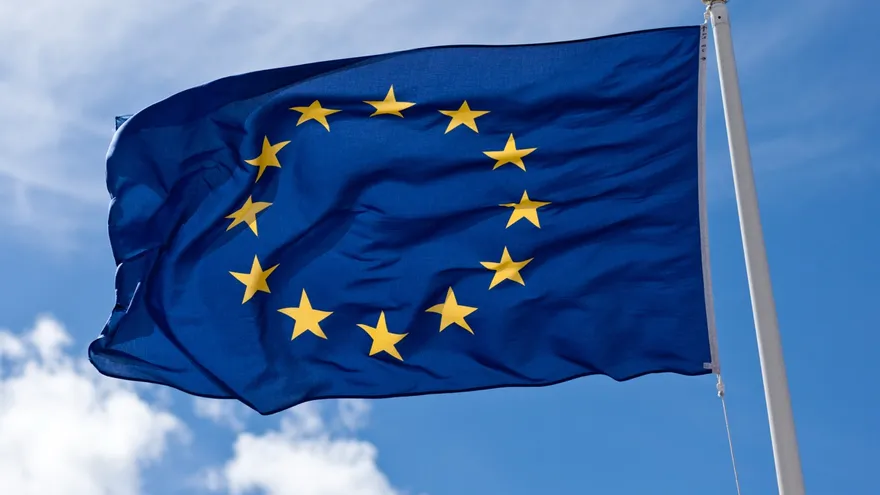
Ten EU AI providers scored on ownership, EU processing, infrastructure, certification, models, prices and transparency. Data residency is not sovereignty.

Summary · Sovereign AI in Europe takes more than an EU data centre. We scored ten EU AI providers from 1 to 3 on seven criteria: ownership, EU processing, infrastructure, certification, transparency, models and self-serve pricing. GreenPT, which publishes this list, ranks itself first for teams that want to build on sovereign AI today; the scores show where others are stronger, notably own data centres and certifications. If SecNumCloud is a hard requirement, look at Cloud Temple and OUTSCALE first.
GreenPT Research · 20 November 2026 · facts and prices as checked on that date.
Disclosure. GreenPT publishes this list and ranks itself first. The scores below show where other providers are stronger, notably own data centres and certifications, and we say why.
Residency is not sovereignty
A sovereign EU AI provider is a company owned and governed under EU law, with no US parent, that processes your prompts in the EU by default on infrastructure it runs itself or uses through EU partners, holds certifications built for this purpose, publishes how it handles data and serves open-weight models you can take elsewhere.
Data residency is a narrower promise: your data sits in an EU data centre. It says nothing about who owns the company that runs that data centre, or which courts can order it to hand data over. The two are often sold as one.
The clearest case is the US hyperscalers. Microsoft completed its EU Data Boundary in February 2025, so data for its EU cloud services stays in the EU. The parent company is still American, and in our judgement an EU region run by a US parent is plausibly exposed to the US CLOUD Act through that parent. Residency is solved. Jurisdiction is not.
Buyers fall into this gap all the time. Our study of 240 Dutch AI vendors found that 62% signal EU hosting or sovereignty, while only around 5% run an EU-owned model. For what sovereignty means in practice for a European organisation, read our guide to sovereign AI in Europe.
How we scored
Every provider gets 1 to 3 points on each of seven criteria, from public sources checked on 20 November 2026. We link the source for every claim below.
- Owner (O). 3: EU-owned, under EU law, no US parent. 2: an EU company with major non-EU investors, or owners we could not verify. 1: a parent outside the EU.
- EU processing (P). 3: processes prompts in the EU only. 2: EU by default, with an opt-in endpoint outside the EU. 1: its terms allow processing outside the EU.
- Infrastructure (I). 3: runs the service on infrastructure it operates itself (its own data centres, GPUs or cloud region). 2: runs on EU partners’ data centres, or our sources do not say whose. 1: can run on a non-EU cloud.
- Certification (C). 3: SecNumCloud or BSI C5 covering the AI service or the infrastructure under it. 2: other audited certifications such as ISO 27001, SOC 2 or HDS, or a national qualification. 1: none stated.
- Transparency (T). 3: publishes its sub-processors (or states it has none) and how it handles prompts. 2: a clear statement on retention and training. 1: no such statement in our sources, or statements that contradict each other.
- Models and exit (M). 3: two or more of the current frontier open-weight families (GLM-5.x, Kimi K3.x, DeepSeek V4.x). 2: one of them, or a range of current open-weight models. 1: one vendor’s models only. Open weights matter because you can move the same model to another host, or run it yourself.
- Self-serve and prices (S). 3: sign up and pay per token at published euro prices. 2: self-serve with a catch, such as USD prices, no trial stated, a monthly minimum or one flat rate. 1: contract or per-deployment billing, with no per-token prices.
The first five criteria measure sovereignty. The last two measure whether a team can build on the service today. We do not add the scores up. The order is GreenPT’s editorial judgement for teams that want to build on sovereign AI today: self-serve access with published euro prices, current frontier open-weight models, EU processing by default and transparency weigh most for us. The scores show where each provider is stronger, including where others beat GreenPT.
The scores
| # | Provider | Country | O | P | I | C | T | M | S |
|---|---|---|---|---|---|---|---|---|---|
| 1 | GreenPT | Netherlands | 3 | 2 | 2 | 1 | 3 | 3 | 3 |
| 2 | IONOS | Germany | 3 | 3 | 3 | 3 | 3 | 2 | 2 |
| 3 | STACKIT | Germany | 3 | 3 | 3 | 3 | 2 | 2 | 3 |
| 4 | regolo.ai | Italy | 3 | 3 | 3 | 2 | 2 | 3 | 3 |
| 5 | Scaleway | France | 3 | 3 | 3 | 2 | 2 | 3 | 3 |
| 6 | OVHcloud | France | 3 | 3 | 3 | 2 | 2 | 2 | 3 |
| 7 | Berget AI | Sweden | 3 | 3 | 2 | 1 | 2 | 3 | 2 |
| 8 | OUTSCALE | France | 3 | 3 | 3 | 3 | 1 | 1 | 1 |
| 9 | Cloud Temple | France | 2 | 3 | 2 | 3 | 1 | 2 | 2 |
| 10 | Mistral AI | France | 2 | 1 | 1 | 2 | 1 | 3 | 2 |
Read the table as a profile, not a sum. GreenPT scores 3 on ownership, transparency, models and self-serve, and lower on EU processing (2), infrastructure (2) and certification (1). Eight providers process in the EU only; IONOS, STACKIT, regolo.ai, Scaleway, OVHcloud and OUTSCALE run the service on infrastructure they operate themselves; and IONOS, STACKIT, OUTSCALE and Cloud Temple hold SecNumCloud or C5. If those criteria matter most to you, weigh them, and your order will differ from ours.
If SecNumCloud is a hard requirement, start with Cloud Temple and OUTSCALE: both offer language models on SecNumCloud 3.2 infrastructure. They sit lower in this list because of model choice, pricing and published data handling, not because of sovereignty.
The ten providers
1. GreenPT (Netherlands)
This is us, and we rank ourselves first for teams that want to build on sovereign AI today. GreenPT BV, based in Utrecht, is a Dutch-owned company with no US parent. The default endpoint, api.greenpt.ai/v1, always runs inference in the EU, and account, billing and usage data stay in the EU whichever endpoint you call (regions). Inference runs in EU data centres in France, Finland and Germany operated by EU partners, and the list of sub-processors is public. We never train on customer data, and the DPA is part of the terms. The OpenAI-compatible API serves GLM-5.3 (€1.10/€4.40), Kimi K3.1 Pro (€3.30/€16.50) and DeepSeek V4.1 Flash (€0.22/€1.10), self-serve with prepaid euro credits that never expire and a free API-only plan. Every response reports its energy use and CO₂e emissions.
Where we lose points: we do not own data centres (I: 2). We offer an opt-in US endpoint, api.us.greenpt.ai, for a subset of models (P: 2). We hold neither SecNumCloud nor C5, and claim no certification on this list (C: 1). We are also a young, small company. Details: GreenPT’s EU inference API.
2. IONOS AI Model Hub (Germany)
IONOS is majority-owned by United Internet, which holds 63.8% of the shares. Its AI Model Hub runs in Germany only, and IONOS states that prompts are never logged or used for training, that the service uses no sub-processors and that it sits inside its BSI C5 scope (data handling). That is the most complete sovereignty statement on this list.
Where it falls short: the catalogue covers Qwen 3.x, Llama 3.3, Mistral Small and gpt-oss, with no GLM, DeepSeek or Kimi models. IONOS added whisper-large-v3 for speech in November 2026. No free tier is stated, and the .com site lists prices in dollars, such as gpt-oss-120b at $0.17 in and $0.71 out per million tokens (prices).
3. STACKIT AI Model Serving (Germany)
STACKIT belongs to Schwarz Group, the owner of Lidl, and runs its own data centres in Germany and Austria. Queries are neither stored nor used to train models. It holds C5 Type 2 and ISO 27001. The API is OpenAI-compatible, there is a 30-day trial, and prices are in euros: gpt-oss-120b and Qwen3.8-27B both cost €0.45 in and €0.65 out per million tokens, next to Gemma 4 and Llama 3.3 (product page).
Where it falls short: no GLM, DeepSeek or Kimi models, so the strongest open-weight reasoning models are missing. Data handling is a statement, not a published sub-processor list in our sources.
4. regolo.ai (Italy)
regolo.ai is run by the Italian Seeweb / DHH group from its own data centres in Frosinone and Milan. It serves gpt-oss-120b (€0.20/€0.70), DeepSeek V4.1 Flash (€0.45/€1.80), GLM-5.2 (€2.30/€6.90) and the Swiss Apertus-70B, with a 30-day trial that needs no card and a flat plan from €39 a month. It holds a zero-data-retention certificate, ISO 27001, 27017 and 27018, CSA STAR and Italy’s ACN qualification (pricing and compliance).
Where it falls short: no SecNumCloud or C5. GLM-5.2 is a version behind and costs more than elsewhere.
5. Scaleway Generative APIs (France)
Scaleway is part of the French Iliad group, with no US parent. It serves models on its own GPUs in a Paris data centre. Prompts are not stored or used for training, batch inputs are kept for 24 hours, and Scaleway states it is not subject to the US CLOUD Act. The API is OpenAI-compatible and priced in euros, with the first million tokens free: GLM-5.2 at €1.80/€5.50, DeepSeek V4.1 Flash at €0.60/€1.80 and gpt-oss-120b at €0.15/€0.60 (prices).
Where it falls short: SecNumCloud is “not yet granted”; it holds ISO 27001 and HDS. Serverless inference runs in Paris only, and Scaleway retired several models from 1 July 2026, so plan for migrations.
6. OVHcloud AI Endpoints (France)
The Klaba family holds 79% of OVHcloud, which runs its own data centres; AI Endpoints serves from Gravelines. There is zero data retention apart from billing and no training (AI Endpoints). More than 20 models are on offer, including gpt-oss, Llama, Mistral, Qwen and DeepSeek V4.1 Flash, with Qwen3.8-27B at €0.40/€2.70 (catalogue). You can even try it without a key, at two requests a minute (capabilities).
Where it falls short: OVHcloud’s SNC Cloud Platform obtained SecNumCloud in September 2026, but OVHcloud does not state it for AI Endpoints, so we score its ISO 27001, SOC 2 Type II and HDS. Of the frontier open-weight families, only DeepSeek is there.
7. Berget AI (Sweden)
Berget AI was founded in Stockholm in 2024 and raised a €2.1M seed round in February 2026. It runs in Swedish data centres and offers OpenAI-style chat completions in euros with “no data retention, no training” (products). GLM-5.2 costs €1.40/€4.40 and Kimi-K3 €3/€15 (August 2026), and it reports energy per request.
Where it falls short: no certifications stated, and our sources do not say whose data centres it uses. After a €5 trial credit, paid plans start at €25 a month.
8. OUTSCALE (France)
OUTSCALE is the Dassault Systèmes cloud, based in Saint-Cloud, and runs a SecNumCloud 3.2 region. Mistral models are available through its Marketplace, billed monthly per deployment after the organisation is validated (documentation).
Where it falls short: one vendor’s models, no per-token prices and no prompt-handling statement in our sources. For a SecNumCloud mandate, it is one of two real options.
9. Cloud Temple (France)
Cloud Temple’s LLM-as-a-service runs on SecNumCloud 3.2-qualified infrastructure according to its documentation, with HDS, in France only. It offers 32 open models, including gpt-oss, Qwen 3.6, Llama 3.3 and Mistral Small 4, at a flat €1.80 in and €8 out per million tokens (product page).
Where it falls short: we could not verify who owns the company (O: 2), the documentation does not say whose infrastructure it is (I: 2), and our sources hold no statement on retention or training (T: 1). The flat rate means a small model costs as much as a large one.
10. Mistral AI (France)
Mistral is Europe’s best-known AI lab and publishes open-weight models. Next to its own models it hosts GLM 5.3 ($1.40/$4.40) and DeepSeek V4.1 Flash ($0.30/$1.20), with Mistral Small 4 at $0.15/$0.60 (pricing). Its API servers are in Sweden (data storage), it holds SOC 2 Type II and ISO 27001/27701, and its own data centre at Bruyères-le-Châtel is due in the second half of 2026.
Where it falls short: its €3bn Series D in September 2026 was led by Samsung, with the EU Scaleup Europe Fund as co-lead. Its processor terms allow processing on Google Cloud in the USA, and it offers a US endpoint; data there is plausibly exposed to the CLOUD Act through US operations. On the free Experiment plan your data may be used for training, and Mistral’s pages contradict each other. Zero data retention is granted case by case.
Who we left out, and why
- Aleph Alpha (Heidelberg): Cohere of Canada signed a definitive deal on 16 September 2026 that would give Cohere shareholders about 90%; closing is pending.
- Exoscale (Lausanne): Switzerland is not in the EU, and its owner A1 Telekom Austria is controlled by América Móvil of Mexico.
- Infomaniak (Geneva area): Switzerland is not in the EU. Foundation-controlled with its own Swiss data centres, it would otherwise score well on ownership.
- Nscale (London): a UK company, with a NYSE filing in September 2026.
- Fluidstack: headquartered in New York since December 2025, and it sells GPU capacity, not a token API.
- Requesty: a UK company whose EU gateway runs on AWS Frankfurt; the model call stays in the EU only if you pick an EU deployment (EU routing).
- Nebius (Amsterdam): listed on Nasdaq with US sites, so plausibly exposed through US operations. Its public serverless region is “Global” and can change without notice, and support access may come from the US, Israel or Serbia (legal guide).
- US hyperscalers’ EU regions: data stays in the EU under offerings such as Microsoft’s EU Data Boundary, but each is plausibly exposed to the CLOUD Act through its US parent.
Questions that test a sovereignty claim
Put these to any provider, including us:
- Who owns the company, and is there a parent or major shareholder outside the EU?
- Could a US court plausibly reach your data through a US parent or US operations?
- Where is a prompt processed by default, and can it leave the EU without you choosing it? Is there a “global” region?
- Whose data centres and GPUs run the model, and is the sub-processor list public?
- Which certification covers this AI service, not just another product from the same company?
- Are prompts and outputs stored, for how long, and are they used for training on any plan, including free ones?
- Are the models open-weight, so you can move to another host or run them yourself?
- Are per-token prices published in euros, and can your team start without a sales call?
- Where do account, billing and support data live, and who can access them from outside the EU?
Related reading
- The best EU inference providers of 2027: the same market, ranked on models, prices and speed.
- The best EU speech-to-text APIs of 2027: transcription under EU jurisdiction.
- Which AI model providers Dutch AI vendors actually use: the sovereignty gap, measured.
- Sovereign AI in Europe and GreenPT’s EU inference API.
Compiled by GreenPT Research on 20 November 2026 from the public sources linked above. Prices are per million tokens, input and output, on that date. CLOUD Act notes are our judgement, not legal advice.
Frequently asked questions
What is a sovereign EU AI provider?
A company owned and governed under EU law, with no US parent, that processes prompts in the EU by default on infrastructure it runs itself or uses through EU partners. It publishes how it handles data and serves open-weight models, so you can leave. An EU data centre on its own is data residency, not sovereignty.
Does the US CLOUD Act reach an EU region of a US cloud provider?
That is a legal judgement, not a settled fact. Our view: a provider with a US parent or US operations is plausibly exposed to the CLOUD Act wherever the data sits. Microsoft completed its EU Data Boundary in February 2025, which keeps data in the EU, but the parent company stays American.
Which sovereign EU AI provider ranks first in 2027?
In our editorial ranking, GreenPT, which publishes the list. Self-serve euro pricing, current frontier open-weight models, EU processing by default and transparency weigh most for us. Only IONOS, STACKIT and OUTSCALE score 3 on ownership, EU processing, infrastructure and certification alike.
Which EU AI providers run on SecNumCloud infrastructure?
Cloud Temple's documentation says its LLM service runs on SecNumCloud 3.2-qualified infrastructure, and OUTSCALE offers Mistral models in its SecNumCloud 3.2 region. OVHcloud's SNC Cloud Platform holds SecNumCloud, but OVHcloud does not state it for AI Endpoints.
Where does GreenPT rank, and why?
First, as our editorial judgement. GreenPT is Dutch-owned with no US parent, uses its EU endpoint by default, keeps account and billing data in the EU, publishes its sub-processors and serves GLM-5.3, Kimi K3.1 Pro and DeepSeek V4.1 Flash self-serve in euros. Others score higher on infrastructure, EU processing and certification: GreenPT does not own data centres, offers an opt-in US endpoint and holds neither SecNumCloud nor C5.
Continue reading
Research
Metis Hybrid Olala: a European decision model in one day
OVHcloud launched Olala mini on 19 November. A day later we had trained Metis Hybrid Olala on it, one of very few decision models on a European base.
Read article
Research
The 10 best EU inference providers of 2027
Ten EU inference APIs compared for GDPR: owner, where models run, OpenAI compatibility, prices for GLM-5.3 and DeepSeek, and where GreenPT is beaten.
Read article
Research
The 10 best EU speech-to-text APIs of 2027
Ten EU speech-to-text APIs ranked on GDPR data residency, Dutch, German and French support, live transcription, diarization and published price per hour.
Read article